Damon Deteso: Practical Alternatives to Full-Court Basketball
by ago0
Damon Deteso is a seasoned radiologist based in Saratoga Springs, New York, whose career spans clinical medicine, imaging research, and emerging artificial intelligence technologies. Since 2004, Dr. Damon Deteso has worked with Millennium Medical Imaging, interpreting CT scans, MRI studies, X-rays, ultrasound imaging, and nuclear medicine studies for five hospitals throughout the region. His experience includes emergency department radiology and outpatient imaging services, along with consulting work focused on training AI systems to detect pathologies on X-rays. Outside of medicine, Dr. Damon Deteso enjoys basketball, making the topic of alternative ways to play the sport especially relevant. His background combines scientific expertise, academic achievement, and an appreciation for recreational activities that support physical fitness, teamwork, and healthy lifestyles.
Practical Alternatives to Full-Court Basketball
Basketball ranks among the most popular sports in the United States. According to a Sports and Fitness Industry Association study, approximately 30 million Americans aged six and older play basketball every year. The US Census, meanwhile, reports that basketball is the most popular high school sport in the country. Individuals who play basketball regularly enjoy a diversity of physical and mental health benefits, ranging from improved cardiovascular performance to the development of important social skills. On average, athletes burn between 600 and 750 calories per hour while playing basketball.
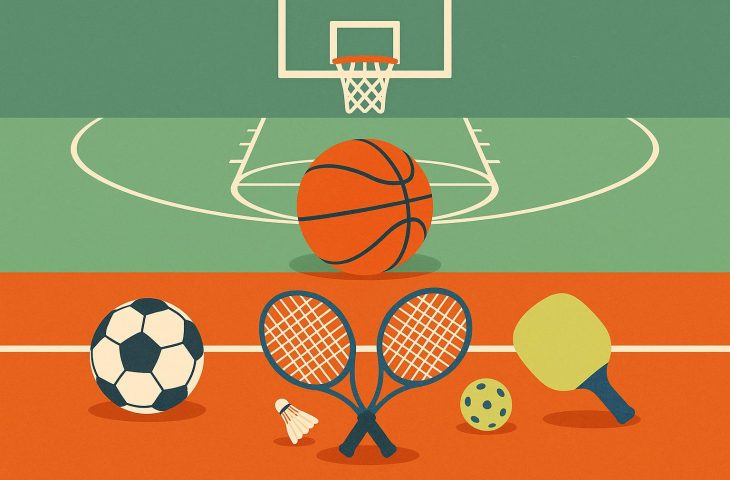
While basketball courts are fairly common throughout the US, basketball hoops are even more ubiquitous. In some situations, athletes may only have access to half of a basketball court. Fortunately, individuals can participate in many alternatives to a traditional game of full-court basketball.
For players who want to enjoy a regular game of basketball but only have access to a hoop or small court, they can engage in a game of half-court basketball. Half-court basketball is also ideal in situations when teams have a limited number of players, such as a game of three-on-three basketball. Half-court basketball generally follows the same rules as a normal game of basketball, with a few key differences.
The main changes half-court basketball players need to make involve restarting play after a made basket and handling changes of possession. During a regular game, after a team scores a basket, the opposing team simply puts the ball back into play and begins dribbling up the court. In half-court basketball, players need to check the ball. A player from the team with possession of the ball stands at the half-court line, facing the basket, while a defensive player stands across from them, with their back to the basket. The offensive player bounce passes the ball to the defender, who then bounce passes the ball back. At this point, play can begin, though offensive players can continuously check the ball so that their opponents are not sure precisely when play will begin.
It should be noted that there are no official rules for half-court basketball, and variations exist in different places. For instance, some players resume play following a made basket by a member of the non-scoring team passing the ball from the baseline (under the hoop) to a teammate standing somewhere beyond the three-point line.
When it comes to changes of possession, players often need to clear the ball, which involves dribbling the ball out to the half-court line, then turning around, returning to the court, and resuming play. The exact rules for clearing the ball vary among different players and regions. For some players, clearing the ball is necessary for every change of possession, such as after a steal or defensive rebound. Others only require clearing the ball if the offensive team has attempted at least one shot, meaning a steal or turnover early in the possession does not require the defense to clear the ball.
Half-court basketball games consist of other minor differences. For instance, full-court basketball games typically start with a jump ball at half-court. Because there is no center circle in a half-court game, teams usually determine possession by flipping a coin. Teams may also make adjustments to scoring, such as counting regular field goals as one point instead of two, and shots from beyond the arc as two-pointers rather than three-pointers.
In addition to half-court basketball, players can participate in various basketball mini-games. A few popular options include HORSE, knockout, and taps.
About Damon Deteso
Dr. Damon Deteso is a diagnostic radiologist with Millennium Medical Imaging in Saratoga Springs, New York. Since 2004, he has interpreted a broad range of imaging studies for hospitals and outpatient facilities throughout the region. His professional background includes residency training at Tufts University School of Medicine, fellowship training at the University of California, San Francisco, and consulting work related to AI-assisted X-ray analysis. Outside of medicine, he enjoys basketball, astronomy, guitar, and travel.
Related posts
Entertainment / by - ago
3 Tips to Develop Fitness Habits for Healthy Condo Living
The younger generation has realized the importance of health and have taken to living active, wellness-focused lifestyles. Developing healthy habits can go a long way in helping you stick to…
Entertainment / by - ago
6 Hobbies To Effectively Build Consistency And Routine
Consistency is an important trait that helps build trust and better bonds with friends, reliability, enhances discipline, and so much more. However, this quality can be quite difficult to master…

Entertainment / by - ago
5 Great Switch 2 Games to Play
The Nintendo Switch 2 is the next-generation console released by Nintendo. It features a faster refresh rate, 4K resolution when docked to a TV and magnetic joycons. It allows for…
Entertainment / by - ago
4 Engaging Offline Activities To Do in Your Condo
In today’s day and age where technology is prominent, we rarely take the time to get off our phone and do other activities other than eating, doing chores and sleeping….