Ralph Byer: Hurricane Readiness Strategies for Safety and Preparedness
by ago0
Ralph Byer is an experienced financial advisor and wealth manager who has held leadership positions including senior consultant and managing director. Throughout his career, Ralph Byer has advised individuals, families, and corporations on wealth protection, preservation, growth, retirement income planning, wealth transfer strategies, and trust and estate planning. He is known for providing traditional investment guidance designed to help clients achieve their financial objectives. Beyond his professional work, he supports a variety of charitable organizations focused on youth development, family services, cancer research, and community enrichment. While hurricane preparedness is a public safety topic that affects individuals, families, and businesses alike, the principles of planning, risk management, and long-term preparedness align with the thoughtful approach Mr. Byer has demonstrated throughout his professional and philanthropic endeavors.
Hurricane Readiness Strategies for Safety and Preparedness
A hurricane is a massive, rotating atmospheric system that develops over heated tropical waters and carries significant destructive potential. These storms have the capacity to generate threats such as intense rainfall, surging coastal waters, and powerful winds.
While these natural events are inevitable, it is possible to decrease the associated risk of personal harm and destruction to architecture and other infrastructure through preventive planning. Well thought out preparation transforms such an environmental crisis into a manageable situation focused on safety.
In recent years, there has been an increase in tropical disturbance severity in the United States. Some of events include Hurricane Ian in 2022, Hurricane Idalia in 2023, and Hurricane Beryl in 2024. Environmental agencies report that storm-related expenses have surpassed $1.5 trillion since 1980. Furthermore, climate change contributes to more frequent and intense weather phenomena.
Notably, hurricanes don’t just threaten coasts. They can trigger inland tornadoes and floods. Understanding all these risks is essential for those living in at-risk areas.
It is crucial to know how to interpret meteorological terminology and hazard levels. A hurricane or tropical storm watch indicates that there could be dangerous conditions within two days. A hurricane or tropical storm warning signals that these conditions are imminent and could arrive in 24 hours.
The Saffir-Simpson scale categorizes hurricanes from one to five based on their sustained wind velocities. This rating system helps predict property damage and identify major storms that can cause catastrophic structural failures.
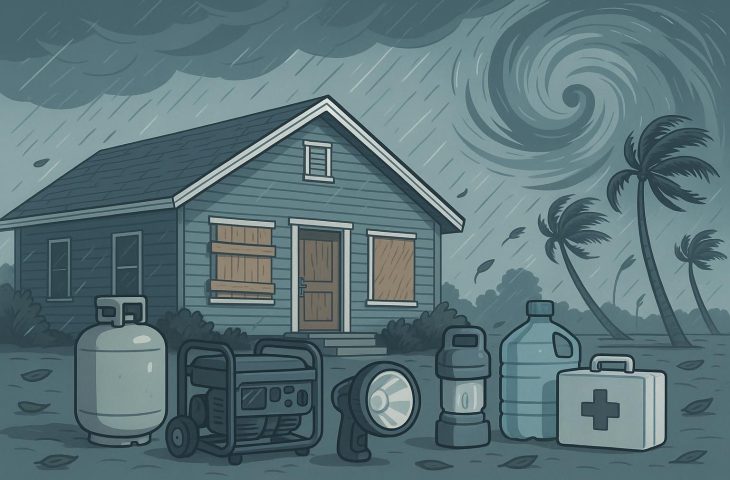
Families should gather essential resources and establish clear protocols that detail what they will do before a storm arrives. They should prepare a portable kit containing three days of food, water, and hygiene items, and about two weeks of non-perishable provisions and one gallon of water per person per day.
Hurricanes also require that individuals create a comprehensive communication strategy. Families should designate meeting locations and identify out-of-area contacts in case cellular networks fail. They should test these plans through household drills to ensure that every member understands their responsibilities during an actual emergency.
Furthermore, to safeguard everyone’s health during a crisis, it helps to secure at least a two-week supply of necessary medications. Individuals with chronic conditions must consult medical providers early to establish emergency care contingencies.
Protecting residences requires reinforcing structurally weak areas so they can withstand extreme weather forces. Property owners should install permanent shutters or have thick plywood at the ready to secure windows and glass entryways when a hurricane is expected. Additionally, reinforcing garage doors and clearing rain gutters prevents water from finding its way into a structure, thereby compromising the building’s integrity.
Businesses should pay attention to data security and operational continuity. They should back up important digital files to remote locations and find alternative workspaces for employees. Moreover, they should document property through photographs. This helps simplify insurance claims processes and financial recovery efforts.
During the storm’s peak, individuals should ideally shelter in a small, windowless interior rooms that sit on the lowest floor. Even if the conditions briefly calm, they should remain inside. This is because the hurricane’s “eye” – a hurricane’s relatively calm and clear center – brings only a short pause before extreme winds and rain resume.
Once the storm passes, there may still be danger. Contaminated floodwater and unstable or floating debris create risks. People should avoid walking through standing water, which can conceal hidden hazards or carry electrical currents. When using a generator, it should only be operated outdoors and away from windows to prevent carbon monoxide entering the building.
Recovery extends beyond the cleanup. A hurricane’s emotional weight can be significant. Reaching out to professional support services helps people process trauma and stress. Also, staying cautious throughout cleanups helps prevent physical injuries.
About Ralph Byer
Ralph Byer is an accomplished financial advisor and wealth manager with experience as a senior consultant and managing director. He has advised clients on wealth management, retirement income planning, trust and estate matters, and wealth transfer strategies. A graduate of the State University of New York at Stony Brook and the University of South Florida, he is also an automobile restoration enthusiast and active philanthropist who supports organizations focused on cancer research, youth services, family care, and community development.
Related posts
news / by - ago
How Nevada’s 2026 Traffic Law Changes Could Affect Vegas Accident Claims
You might have been hurt in a car accident in Las Vegas, and now, in 2026, you are hearing news about new traffic laws in Nevada that may affect your…
news / by - ago
Persistent Sore Throat and What It Could Mean
Most people experience a sore throat at some point, and in many cases, it resolves within a few days without medical intervention. Simple irritants, viral infections, or seasonal changes are…

news / by - 05/09/2025 21:40
4 Creative Writing Ideas for Young Minds
Creative writing is a kind of artistic expression using one’s imagination to tell ideas and their emotion through various forms. Children can easily find one that interests and excites them,…

news / by - 23/08/2025 20:44
The Healing Power of Greenery: Bringing Nature into Your Condo
Having plants around your condo is more than just aesthetics. Wellness and plants are connected to each other, promoting emotional balance, physical health, and well-being. Community Plants can foster relationships….