How Nevada’s 2026 Traffic Law Changes Could Affect Vegas Accident Claims
by ago0
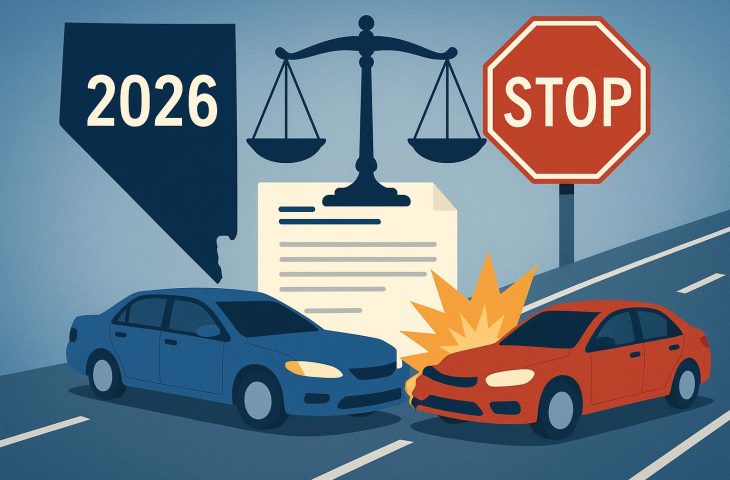
You might have been hurt in a car accident in Las Vegas, and now, in 2026, you are hearing news about new traffic laws in Nevada that may affect your claim.
It is always useful to learn as much as you can about your rights.
In an effort to reduce impaired and dangerous driving, Nevada lawmakers added changes to increase enforcement around impaired driving and driving in school zones. These changes might not affect the safety of all Nevadans, but they will definitely affect how insurance companies, investigators, and lawyers evaluate fault in a crash.
What Changed Under Nevada’s Updated Traffic Laws?
To counter dangerous driving habits, Nevada lawmakers introduced changes intended to reduce dangerous driving behavior and strengthen enforcement in situations involving impaired driving and school zones.
The Safe Streets Act (AB4)
The updated law now has higher penalties for DUI-related crashes that result in the death of a victim.
Compared with the previous version of the law, longer prison sentences and additional legal consequences now apply.
School Zone Safety (AB6)
Nevada also updated laws for speeding violations in school zones.
The law increases penalties for traffic violations committed in active school zones. These are periods when children are typically present and the reduced speed limit is in effect.
Nevada drivers should check with the state and Nevada traffic law officials for updates. Nevada laws and enforcement are expected to change in the future.
How These Changes May Affect Accident Claims
Should a crash occur in Las Vegas, Nevada’s updated traffic laws may come into play as the insurance company determines fault and liability.
For instance, if a driver was speeding in a school zone or violating another Nevada traffic law, these violations may factor into the insurance process. It does not have to be a new 2026 law to have bearing on the accident, and Nevada law may be cited to prove liability.
While a traffic violation does not automatically establish liability, it could be used as evidence to support liability if the violation was committed and caused or contributed to an accident in Nevada.
How Some Violations May Be Viewed Differently
| Violation | Prior Focus | Updated Focus |
|---|---|---|
| Speeding in School Zones | Standard traffic enforcement | Increased penalties and stronger safety enforcement |
| DUI-Related Violations | Existing criminal penalties | Stricter criminal and administrative consequences |
How accidents are investigated or how insurers review them may be affected if traffic violations are part of a Nevada crash in 2026.
What Stayed the Same?
Nevada has updated many traffic laws. But some Nevada legal principles remain the same and affect Nevada accident cases.
Nevada’s Modified Comparative Negligence Rule
Nevada operates under a system of modified comparative negligence. If you are less than 51% at fault, you may still recover damages for your injuries.
However, damages may be reduced according to your percentage of fault (NRS 41.141).
Accident Reporting Requirements
Nevada requires that drivers generally report traffic accidents involving injuries, death, or property damage (NRS 484E.070).
The Two-Year Filing Deadline
In Nevada, accident victims in most injury cases generally have two years from the date of a car crash to file a legal claim for damages (NRS 11.190(4)(e)).
These laws have remained the same, regardless of the 2026 traffic law changes.
Why These Changes Matter in Las Vegas
Las Vegas traffic can be challenging because:
- of heavy tourism traffic;
- major events;
- traffic from rideshare companies;
- freeway construction;
- pedestrian traffic around the Strip and
- pedestrian and auto traffic in the area near many of the hotels, casinos, and entertainment complexes.
The 2026 Nevada traffic law updates specifically address Las Vegas school zones, and high-traffic areas near events and tourist hubs.
These changes aim to mitigate conflicts among vehicles, pedestrians, and rideshare services through more strict enforcement at locations, such as airport pathways and major highway exits.
Drivers who are not familiar with Las Vegas may find it particularly difficult to navigate unfamiliar patterns such as abrupt lane shifts, more complex intersections, and crowded streets during peak travel times.
Practical Ways to Stay Safer on Vegas Roads
While it isn’t always possible to avoid an accident, knowing how the state’s updated laws might affect you at the moment can lower your chances of getting involved.
Watch for School Zones and Construction Areas
Watch for varying speed limits, flashing caution signs, and other traffic controls in school zones and construction zones.
You may face greater penalties now for violating these rules.
Move Over Early and Safely
When you notice a car pulled over with hazard lights on, get over when you can, or, if you cannot, slow down as required.
Avoid Distracted Driving
Las Vegas roadways require increased vigilance due to high traffic volumes and unfamiliarity with new regulations.
Distractions, such as using GPS, texting, or interacting with your vehicle dashboard, can significantly increase the risk of an accident.
Drive Only When Able
Do not drive under the influence, nor impaired. Make sure you are awake and alert before setting off to your destination.
Document the Scene After a Crash
If an accident occurs, make a point of collecting key details at the scene as soon as possible.
- Photographs
- Roadway signs
- Traffic signals
- Vehicle damage
- Witness details
- Insurance information
Having accurate information can help you later if questions arise about what caused the crash, who was responsible, or how you should proceed.
Wait for Law Enforcement if Necessary
In most cases, notifying a law enforcement agency can help ensure that an official accident report is on file.
This report can be useful later if you need to file an insurance claim or if documentation is required.
Why Insurance Claims May Become More Complicated
Insurance claims may also become more complex if updated traffic regulations affect the questions of fault or liability to be resolved during the claims process.
An accused driver who violated a new law might face added questions from the insurance adjuster in charge of your case.
The adjuster will likely consider these items as part of their evaluation:
- Police reports
- Any traffic citations issued on the date of the crash
- Witness statements
- Photographs of the scene
- Damage to vehicles
- Conditions on the road surface
In some instances, the parties may disagree on whether a violation occurred at all or whether it played any role in the crash.
This makes the practice of organized documentation all the more crucial.
When Legal Guidance May Help
Some car accident injuries are not covered by insurance or even qualify for compensation.
If your case involves any of the following, however, you may be well-advised to consult an attorney:
- Serious injuries sustained in the crash
- A dispute about who was at fault
- A multi-car accident
- Rideshare involvement
- An uninsured or underinsured driver
- Complications with the insurance company
If you’ve been injured and are dealing with complicated insurance questions after a crash, consulting with a Las Vegas car accident attorney can help you understand how changes to Nevada’s traffic laws may impact your claim.
They can help you obtain a copy of your report, explain Nevada’s liability rules, gather additional documentation, and deal with the insurance company.
The Bottom Line
Nevada’s 2026 traffic law updates reflect a broader effort to make roadways safer and reduce the frequency of preventable accidents in the state.
For drivers in Las Vegas, these updates may impact not only who’s pulled over and why, but also how a car crash claim will be evaluated after an accident.
Understanding updated laws, staying attentive to what’s happening on busy streets, and gathering key information at the scene can help you better prepare yourself should a car accident occur.
As the Las Vegas traffic situation continues to evolve in response to new safety regulations, awareness and preparation remain among the greatest resources a driver can bring to the road.
Related posts

news / by - ago
Ralph Byer: Hurricane Readiness Strategies for Safety and Preparedness
Ralph Byer is an experienced financial advisor and wealth manager who has held leadership positions including senior consultant and managing director. Throughout his career, Ralph Byer has advised individuals, families,…
news / by - ago
Persistent Sore Throat and What It Could Mean
Most people experience a sore throat at some point, and in many cases, it resolves within a few days without medical intervention. Simple irritants, viral infections, or seasonal changes are…

news / by - 05/09/2025 21:40
4 Creative Writing Ideas for Young Minds
Creative writing is a kind of artistic expression using one’s imagination to tell ideas and their emotion through various forms. Children can easily find one that interests and excites them,…

news / by - 23/08/2025 20:44
The Healing Power of Greenery: Bringing Nature into Your Condo
Having plants around your condo is more than just aesthetics. Wellness and plants are connected to each other, promoting emotional balance, physical health, and well-being. Community Plants can foster relationships….