


Vikrum Aiyer is a policy strategist and communications executive based in San Francisco whose work spans government, technology, and climate innovation. Since 2022, he has served as head of global public policy at Heirloom, a carbon-removal technology company, where he has helped secure roughly $600 million in federal funding, expand the company’s coalition of industry partners, and advance workforce development tied to U.S. energy security. Earlier in his career, Aiyer served in the Obama administration at the White House and the Department of Commerce, and later led government relations and communications strategy at Uber/Postmates. A UC Berkeley political science graduate, he also serves as commissioner of San Francisco’s Workforce Investment Board and sits on the boards of the Chamber of Progress and YIMBY Action. Outside of his policy work, Aiyer is an avid cyclist who relies on biking as a practical way to stay active and navigate the city.
Vikrum Aiyer works at the intersection of energy, technology, and public policy as head of global public policy at Heirloom, a San Francisco-based carbon removal technology company. His work focuses on issues including energy, infrastructure, advanced manufacturing, and carbon management.
Outside of his professional work, Aiyer is also an avid cyclist who enjoys biking as a practical way to stay active and navigate San Francisco.
According to the United States Environmental Protection Agency (EPA), the average passenger vehicle produces roughly 4.6 metric tons of carbon dioxide per year, although actual emissions vary considerably based on fuel type, fuel economy, miles traveled, and other factors. Transportation remains a significant source of U.S. greenhouse gas emissions, making improvements in vehicle efficiency, fuels, and transportation infrastructure important areas of technological development.
Americans have many transportation options depending on where they live and work, including personal vehicles, public transportation, carpooling, electric vehicles, walking, and cycling. For trips where cycling is practical, a conventional bicycle offers a particularly energy-efficient form of transportation and produces no direct tailpipe emissions.
E-bikes can similarly provide an alternative for some trips while making longer distances and difficult terrain more accessible.
Cycling can also contribute to more efficient use of transportation infrastructure, particularly in dense communities where road space and parking are limited. For some commuters, bicycles offer the flexibility to navigate congested areas, connect with public transportation, or make shorter trips without using a car.
The benefits vary considerably by geography: transportation needs in a dense city such as San Francisco are very different from those in rural or suburban communities.
Cost is another practical advantage. Bicycles generally require less fuel, maintenance, and storage expense than automobiles. They can therefore provide an affordable transportation option for some households while complementing—not necessarily replacing – cars, public transit, and other modes of transportation.
Bicycles can also help reduce local noise and air pollution when they replace vehicle trips. These benefits can be particularly noticeable in dense urban environments, where transportation activity is concentrated and residents may be exposed to traffic noise and vehicle-related air pollutants.
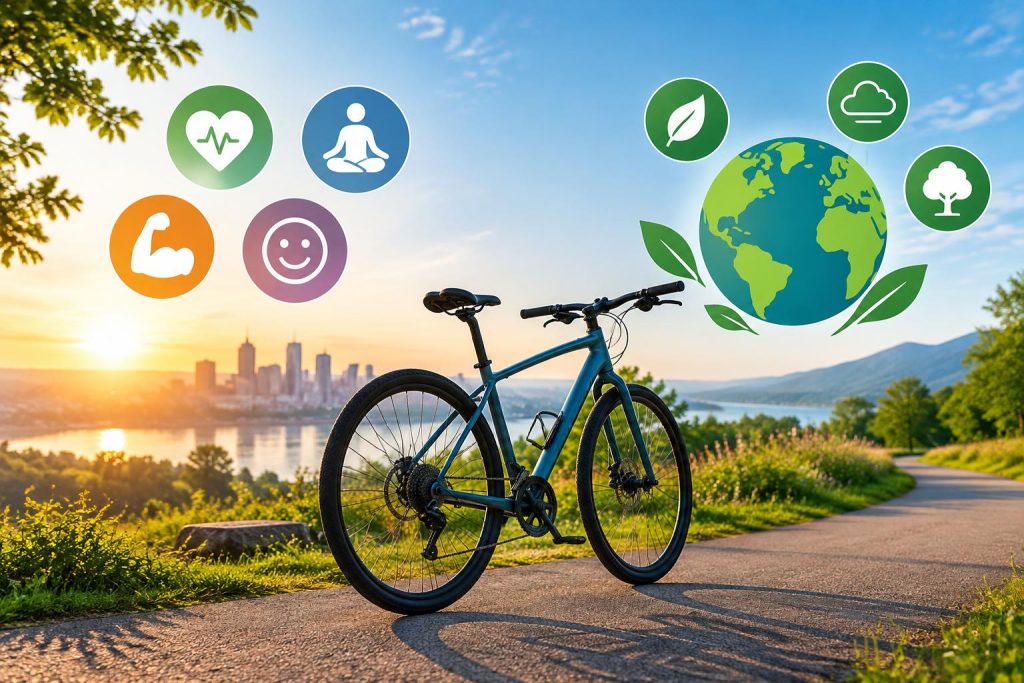
Finally, cycling provides a range of potential health benefits. Regular cycling is a form of low-impact aerobic exercise that can improve cardiovascular fitness, build muscular strength and endurance, and contribute to overall physical activity.
For many riders, cycling also offers an enjoyable way to spend time outdoors, commute, explore their communities, or simply exercise.
Ultimately, cycling is one of many transportation choices available to Americans. Its usefulness depends on factors ranging from distance and weather to infrastructure, safety, accessibility, and personal preference.
Where the conditions make sense, however, bicycles can provide a relatively inexpensive, efficient, and healthy way to get around.
About Vikrum Aiyer
Vikrum Aiyer is the head of global public policy at Heirloom, a San Francisco-based carbon-removal technology company, a role he has held since 2022. He previously served in the Obama administration’s White House and Department of Commerce, and later led government relations and communications strategy at Uber/Postmates. A UC Berkeley graduate, he serves as commissioner of San Francisco’s Workforce Investment Board and sits on the boards of the Chamber of Progress and YIMBY Action. He is also an avid cyclist, photographer, and golfer.