


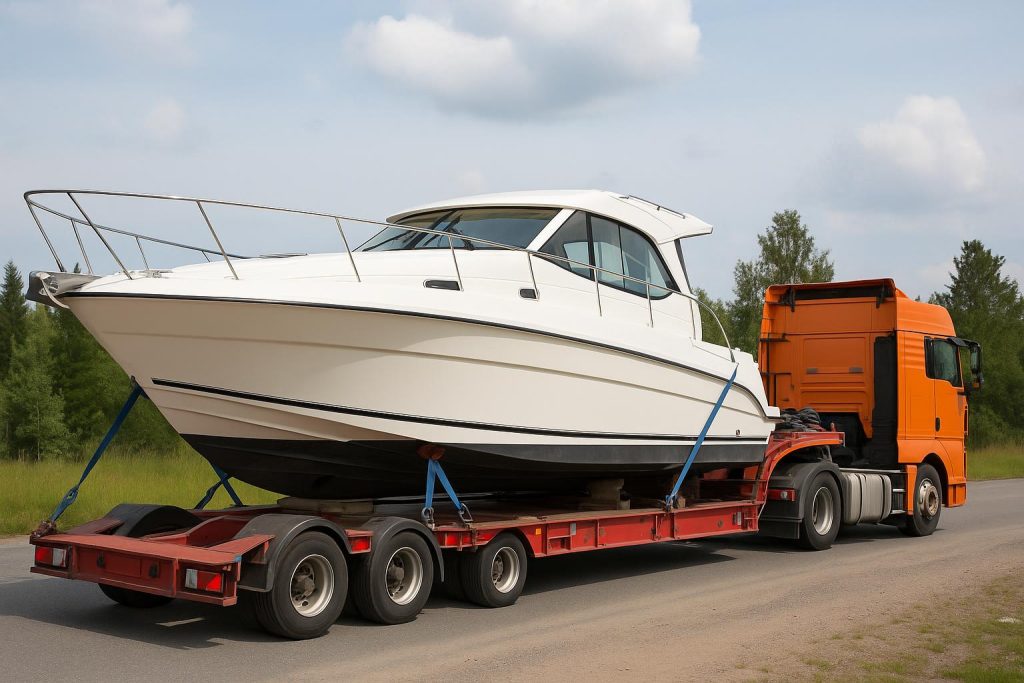
A boat can be transported safely provided there is adequate planning, the right equipment, and proper attention to details. Buying a boat involves spending quite a fortune, and hence any minor mistake during the transportation process could cause major damage. However, applying smart tricks ensures that your boat arrives in one piece whether transporting it locally or long distances away. Below are some of the proven tricks to transporting your boat without incurring any damage.
1. Plan Each Phase Prior to Transportation
Well before the actual transport process begins, good boat transportation starts. This requires that one measures their boat carefully, recording all the details including its dimensions. This information helps one make the correct decision regarding the type of trailer and tow vehicle to choose.
Effective planning will ensure that you plan your route properly for the boat. Make sure that you can identify any winding roads, under construction sites, and low bridges before setting off on your journey. Good planning ensures that you reduce the chances of getting delayed.
2. Pick the Suitable Trailer
Some of the measures that are needed to ensure the boat is protected include securing the correct trailer for use. The trailer can make the boat tilt when transporting it due to incorrect use. Ensure that the trailer distributes load equally at the bottom part of the boat.
Before hauling the boat from the trailer, it is advisable to check the tires’ pressure, brakes, lights, and hitch. While transporting using the trailer on the road, make sure that the trailer is well-maintained so as not to have any problems while in transport. In case the trailer is in poor condition, you may use another trailer.
3. Secure the Boat Correctly
It is essential that the boat be securely fastened when loaded onto the trailer. It is important to use better straps instead of ropes as straps will provide more security and tension. In order to prevent any shifting in position, tie down the boat at different places such as in the front, back, and middle.
The winch must be secured tightly and safety chains should also be attached. Do not pull the straps very tight since too much force may lead to the damaging of the hull.
4. Keep delicate components safe
Prior to the transport, you may remove such items or secure them properly. Items that are classified as loose and fragile include antennas, fishing rods, electronic equipment, pillows, and covers. Loose items will most likely get broken because of vibrations and wind pressure.
It is also important that sensitive parts, including railings, edges, and paint, be padded and foamed. In case your boat has covers, ensure that you have tied it firmly to avoid its movement during transit.
5. Share Weight Consistently
A frequent source of transport damage is inappropriate weight distribution. Make sure the boat sits flush on the trailer, with the majority of the weight positioned somewhat forward of the axle. This keeps things stable when you tow them.
An unstable load might result in trailer separation, swaying, or even steering difficulty. Verify weight balance twice before starting your travel.
6. Drive cautiously and steer clear of abrupt actions
Preventing boat damage depends mostly on safe driving. Do not speed up suddenly, brake hard, or turn sharply. Keep a constant speed and raise following distance to enable gentle stopping.
On bumpy roads, potholes, and speed bumps, be especially vigilant. Traveling at fast speeds even little shocks might compromise the alignment or integrity of the boat.
7. Look at stop
Stop sometimes to check the boat and trailer if you are going a long distance. Look at the hitch connections, tyres, and straps. Travel vibrations can cause fittings to come loose, so tightening them at stops helps prevent mishaps.
This easy behavior could prevent you from huge problems before they get bad.
8. Think About Professional Shipping Services
Should your boat be bigger or should the distance for shipping be farther, then hiring the services of a Boat Shipping Company would be far better than moving the boat yourself. It takes professionals to make sure that the boat is protected while traveling due to their skills and equipment, and your boat will arrive safely at its destination.
Finally
Preparation, suitable equipment, and deft handling are all critical for moving a boat without harm. You can guarantee a smooth and safe transfer experience by careful preparation, appropriate boat securing, delicate part protection, and responsible driving. Whether you do it yourself or hire pros, these clever techniques will enable your boat remain in great condition from start to finish.