


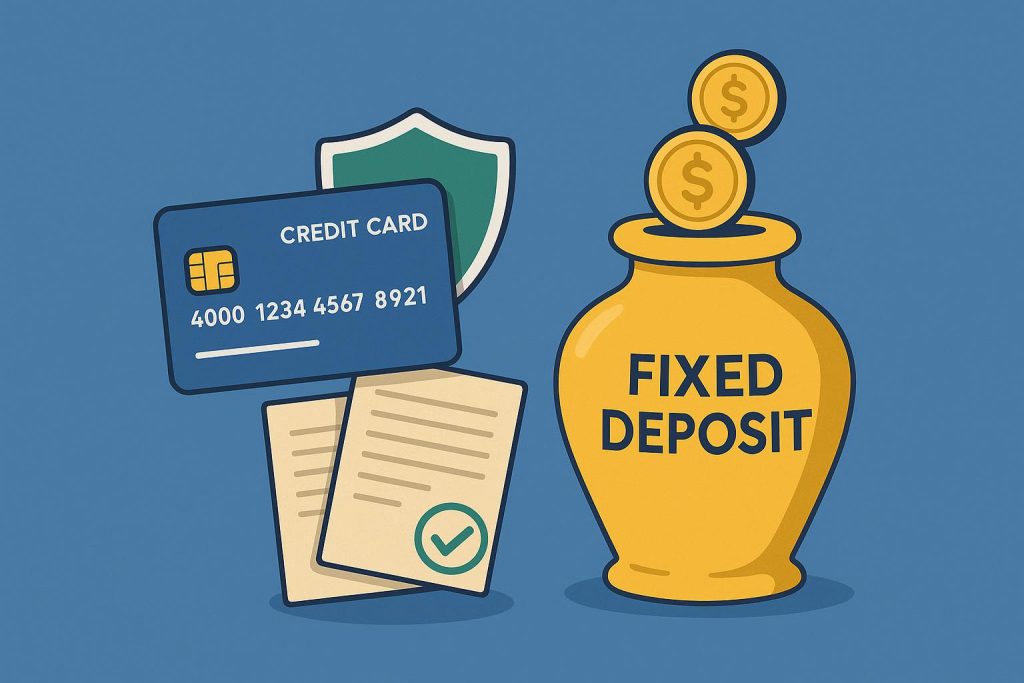
Credit Cards have become an indispensable part of our lives nowadays. We use them for shopping or high-value purchases, earn rewards or manage our budget wisely. If you are new to credit or looking to strengthen your credit profile, a Credit Card against FDs can be a practical and low-risk starting point.
These cards have many advantages and can help you build your credit history as well. Let’s explore more about these cards.
What are Credit Cards against Fixed Deposits and who is eligible?
Credit Cards against FDs are issued by the bank by using your FD as collateral. This means you need to open a Fixed Deposit with the bank before applying for the card.
These Credit Cards are generally suitable for students, homemakers, and newly employed individuals. They are also a good option for anyone looking to start building their credit history or improve their existing credit score in a safe and structured way.
But how do these cards help you build a credit history? Let’s explore below.
How do Credit Cards against Fixed Deposits help you build a credit history?
Cards against FDs help you build a credit history through low interest rates, timely bill repayments, and high credit limits. Continue reading for a better idea below.
Low interest rates
Secured or FD Credit Cards usually have lower interest rates compared to unsecured cards. That’s because the FDs act as collateral. The low interest rates mean that you don’t have to pay high EMIs during your monthly payments.
Easy, timely repayments
FD-backed Credit Cards mean that you can easily pay your bills without worrying about high interest rates. Your bank will send you an upcoming payment alert to your registered mobile number and email address.
Paying your bills on time will demonstrate to lenders, such as your bank and other NBFCs, that you are a responsible and disciplined borrower.
This may also help you during your future loan applications. Consistent timely payments help you build a stable credit history and hence boost your credit score.
High credit limit
In most cases, your Credit Card against your FD will have a high credit limit, which is 80-90% of your FD amount. While this provides flexibility to use the card for your expenses, it’s important to use it responsibly. You must ensure that you keep your credit utilisation ratio below 30% of this limit. Staying within this range not only makes it easier to pay your bills on time but also helps maintain a healthy credit score.
Build or rebuild a good credit score
People with existing credit history or those who wish to improve their credit score can do so using this Credit Card. As mentioned earlier, by making timely repayments and utilising around 30% of their credit limit, you can build a good credit score and ultimately strengthen your credit history.
Conclusion
Applying for a Credit Card against an FD can be a good way to build your credit history in the long run. It offers a secured credit limit, helps you manage expenses responsibly and provides a structured way to demonstrate timely repayments. By keeping credit utilisation low and paying bills on time, you can gradually strengthen your credit profile.