


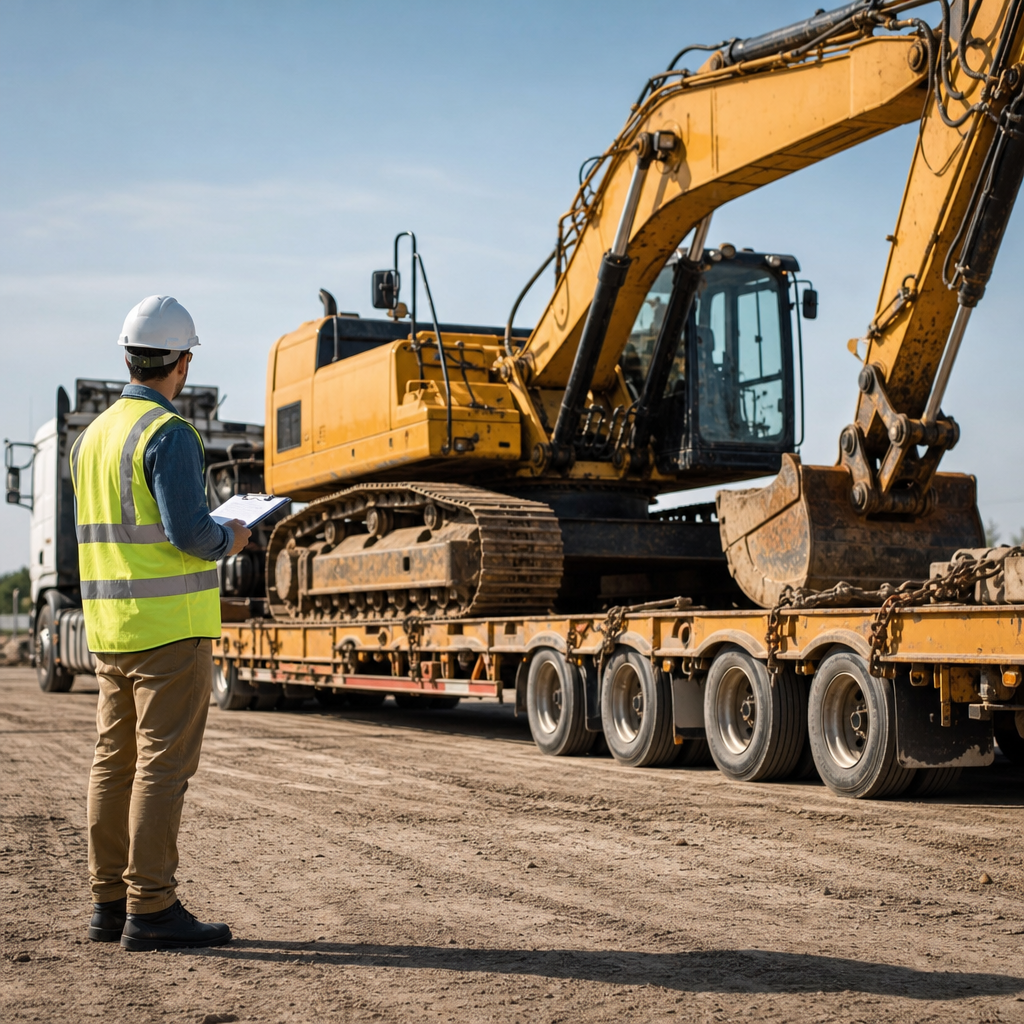
Moving heavy construction equipment from one job site to another is rarely as simple as loading a machine onto a flatbed and hitting the road. It involves meticulous planning, regulatory compliance, route analysis, and coordination across multiple stakeholders. For project managers overseeing large-scale builds, understanding the fundamentals of heavy equipment logistics is not optional — it is a core competency that directly affects timelines, budgets, and site safety. Whether you are relocating excavators, bulldozers, cranes, or compactors, the decisions you make before the first wheel turns can determine whether your project stays on schedule or falls weeks behind.
Why Heavy Equipment Transport Is a Specialized Field
Not every freight carrier is equipped to handle oversized or overweight loads. Construction machinery often exceeds standard legal weight and dimension limits, which means transport providers must obtain special permits, plan non-standard routes, and sometimes coordinate with state and local transportation authorities. A standard semi-truck can legally haul loads up to 80,000 pounds in most U.S. states, but a single large excavator can weigh well over 100,000 pounds. That gap requires specialized trailers — lowboys, RGNs (removable gooseneck trailers), and step-deck configurations — along with drivers who are trained and experienced in securing and transporting such loads.
Beyond the physical requirements, there are timing considerations. Many states restrict oversized load movement to daylight hours, and some routes require pilot cars or law enforcement escorts. Failing to account for these variables can result in costly delays, fines, or worse — accidents that damage equipment or endanger workers and the public. This is why construction companies increasingly rely on dedicated logistics partners rather than attempting to manage these complexities in-house.
The True Cost of Poor Equipment Logistics
Project managers often underestimate the downstream impact of equipment transport delays. When a grader or compactor fails to arrive on schedule, entire crews may be idled, subcontractors may need to be rescheduled, and project milestones can cascade into missed deadlines. In competitive bidding environments, those delays translate directly into financial penalties or damaged client relationships.
Equipment damage during transit is another significant risk. Improper securing, inadequate padding, or the use of trailers not suited to specific machinery can result in hydraulic line damage, structural stress, or cosmetic harm that requires costly repairs before the equipment can be put back into service. A reliable transport partner uses proper tie-down techniques, conducts pre-transport inspections, and documents the condition of equipment before and after each move.
Insurance and Liability Considerations
Before any piece of equipment leaves your yard, it is essential to verify that your transport provider carries adequate cargo insurance. Standard carrier liability often falls far short of the replacement value of heavy construction machinery. Project managers should request certificates of insurance, review policy limits, and confirm that coverage extends to the full value of the equipment being transported. In some cases, supplemental coverage through your own company’s policy may be warranted, particularly for high-value or hard-to-replace machines.
Integrating Equipment Transport Into Your Supply Chain Strategy
Modern construction logistics does not exist in isolation. Equipment movement is one component of a broader supply chain that includes material deliveries, subcontractor scheduling, and workforce deployment. When these elements are not synchronized, inefficiencies multiply. Integrating your equipment transport planning with your overall supply chain strategy ensures that machinery arrives precisely when it is needed — not too early, where it occupies valuable staging space, and not too late, where it stalls progress.
Logistics professionals who specialize in optimizing final mile delivery and supply chain coordination understand that the last leg of any transport journey is often the most complex. For construction equipment, that final mile might involve navigating narrow rural roads, coordinating with site supervisors for safe unloading, or timing arrivals around active work zones. Treating equipment transport as an integrated supply chain function — rather than a one-off logistical task — leads to measurably better outcomes.
Choosing the Right Transport Partner for Construction Equipment
Not all heavy haul carriers are created equal. When evaluating potential transport partners, construction companies should look beyond price and consider factors such as fleet capabilities, permit expertise, geographic coverage, and track record with similar equipment types. A carrier that regularly moves agricultural machinery may not have the same depth of experience with construction-specific loads like tower cranes or tunnel boring components.
Reliability and communication are equally important. Project managers need real-time updates on equipment location and estimated arrival times. A transport partner that goes silent after pickup creates unnecessary anxiety and makes it impossible to coordinate downstream activities. Look for providers that offer tracking technology, dedicated dispatch contacts, and proactive communication protocols.
Bear Down Logistics: A Trusted Name in Construction Equipment Transport
For construction companies seeking a dependable, experienced heavy haul partner, Bear Down Logistics has built a strong reputation in the industry. Their team understands the unique demands of moving construction machinery across short and long distances, handling permitting requirements, route surveys, and specialized trailer selection with precision. Offering reliable construction equipment transport services, Bear Down Logistics brings the operational depth and customer-focused approach that project managers need when timelines are tight and equipment values are high. Their commitment to safe, on-time delivery makes them a go-to resource for contractors who cannot afford logistical surprises.
Industry Standards and Best Practices
Staying current with industry standards is essential for anyone involved in construction equipment logistics. Organizations and publications dedicated to the construction equipment sector provide valuable guidance on maintenance, transport regulations, and emerging technologies that affect how machinery is moved and managed. Consulting authoritative resources like Construction Equipment magazine can help project managers and logistics coordinators stay informed about regulatory changes, new trailer technologies, and best practices for equipment handling during transport.
Industry best practices also emphasize the importance of pre-transport preparation. This includes draining fluids where required by regulation, retracting booms and attachments, removing any loose components, and ensuring that all locking mechanisms are engaged. These steps not only protect the equipment but also reduce the risk of road hazards caused by unsecured parts.
Conclusion: Treat Equipment Transport as a Strategic Priority
Heavy equipment transport is not a background task to be delegated without thought. It is a strategic function that, when managed well, keeps construction projects moving forward efficiently and safely. By partnering with experienced carriers, integrating transport planning into broader supply chain strategies, and staying informed about industry standards, construction project managers can eliminate one of the most common sources of project delay and cost overrun. The investment in quality logistics pays dividends far beyond the cost of the transport itself — it protects your equipment, your schedule, and your professional reputation.